






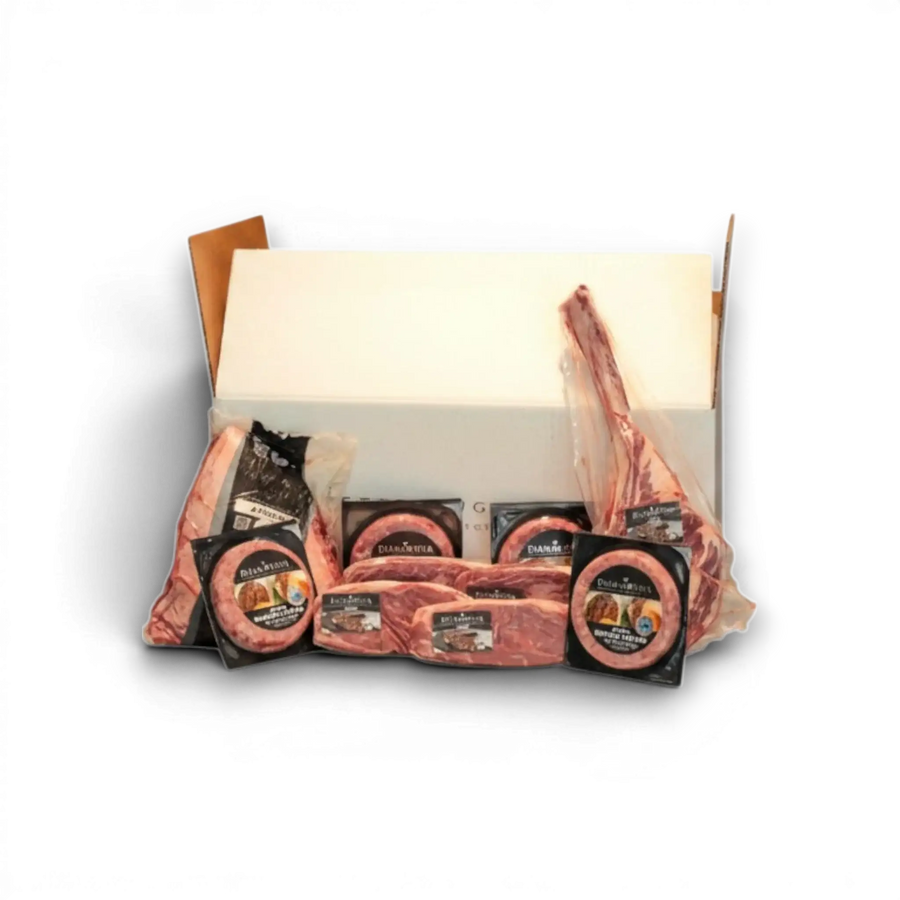

(Picanha)
Tender centre. Crisp fat cap. A temperature-first roast that lets one of beef's most distinctive cuts shine.
Keep the fat cap intact, score it lightly, roast gently, then finish hot. For medium-rare, aim for 54-57°C, rest for 15-20 minutes, and slice across the grain.
Rump Cap Roast at a Glance
Ingredients
- 1 whole rump cap or picanha, about 1-1.5 kg, fat cap attached
- 2 tsp coarse salt or sea salt
- 1-1½ tsp freshly ground black pepper
- 3-4 garlic cloves, crushed
- 1 tbsp olive oil or neutral cooking oil
Quick Method
- Pat dry and score the fat shallowly.
- Season with oil, salt, pepper and garlic.
- Roast fat-side up at 160°C fan or 180°C conventional.
- Finish at 220-230°C until crisp.
- Rest loosely for 15-20 minutes.
- Slice across the grain.
Why Rump Cap Works So Well as a Roast
The signature fat cap protects the beef, renders flavour over the roast and gives picanha its crisp, golden finish.

Keep 5-10 mm
Enough to protect and baste the beef without leaving an overly heavy layer.
Bold and beefy
Rump cap naturally brings more character than very lean roasting cuts.
Temperature wins
Thickness and shape vary, so internal temperature is more reliable than time alone.
Which Rump Cap Should You Buy?
Same cooking idea, different eating experience. Choose the marbling level to match the occasion.
Classic Roast
Bold beef flavour and a strong all-round choice for a family roast or weekend BBQ.
Entertaining Pick
More marbling, richness and tenderness without becoming overwhelmingly rich.
Premium Centrepiece
A more indulgent roast for special occasions where richness is part of the experience.
Pick Your Rump Cap
Three Peter Augustus options, from classic Angus to highly marbled Wagyu.

Angus Picanha Rump Cap SB 2+
Closest match to the recipe size and a great starting point for this roast.
Shop Angus Rump Cap
Wagyu Picanha Rump Cap SB 4-5
Balanced marbling and richness for a standout roast without going ultra-rich.
Shop Wagyu SB 4-5
Wagyu Picanha Rump Cap SB 8-9
Higher marbling for a richer, more luxurious centrepiece.
Shop Wagyu SB 8-9How to Cook Rump Cap Roast
Use the thermometer as your guide. The clock is only there to help you plan.

Preheat
Heat to 160°C fan-forced or 180°C conventional.
Dry, Score, Season
Keep roughly 5-10 mm of fat. Score shallowly, then season with oil, salt, pepper and garlic. Rest 30-45 minutes before cooking.
Roast Fat-Side Up
Cook on a rack until the centre is about 5-8°C below your final target.
Finish Hot
Increase to 220-230°C for roughly 10-15 minutes until the fat is deep golden and crisp.
Rest Loosely
Transfer to a board and loosely tent with foil for 15-20 minutes. Tight foil softens the crust.
Slice Across the Grain
Carve into roughly 5-10 mm slices, rotating sections if the grain changes direction.
Choose Your Doneness
Medium-rare is the sweet spot for a juicy centre and well-rendered fat cap.
Measure in the thickest part of the lean meat and avoid large pockets of fat. People at increased risk of foodborne illness should follow official Australian food-safety guidance when choosing doneness.
Four Ways to Cook Rump Cap
Oven is the easiest all-round method, but picanha adapts brilliantly to live fire and lower-temperature cooking.

Cook over indirect heat until 5-8°C below target, then sear directly over high heat.
Best for: smoke and charCook around 180°C while rotating, then use higher heat for 10-15 minutes if the fat needs more colour.
Best for: even renderingCook at 120-130°C until about 10°C below target, then finish very hot on a grill, BBQ or pan.
Best for: precisionCook at 180°C until 5-8°C below target, then finish at 200°C for around 5-8 minutes.
Best for: smaller roasts
Six Small Things That Make a Big Difference

Two roasts of the same weight can still cook at different speeds.
Aim for an even 5-10 mm rather than trimming it away.
Moisture encourages steaming instead of crisping.
Seasoning 30-60 minutes ahead helps the surface dry and brown.
Tight foil traps steam and softens your crisp fat cap.
Shorter muscle fibres make each slice feel more tender.
What to Serve With Rump Cap

Potatoes
Roast potatoes or creamy mash soak up the rendered beef juices beautifully.
Vegetables
Roast vegetables or a sharp green salad give the plate balance.
Sauces
Chimichurri, salsa verde or horseradish cream cut through the richness.

Store and Reheat Without Drying It Out
Refrigerate cooked rump cap for 3-4 days when cooled promptly, sealed and kept at 5°C or below.
Reheat gently at 120-150°C with a little stock or pan juice, and avoid repeated reheating.
Read This Next
Move from cooking this cut to choosing and cooking premium beef with more confidence.
Rump Cap Roast FAQs
What temperature should rump cap be for medium-rare?
Should the fat cap face up or down?
How do I get the fat cap crispy?
How long should rump cap rest?
Can I cook rump cap on the BBQ?
How much does rump cap cost?
Ready to Cook Rump Cap?
Choose the marbling level that suits the occasion, cook to temperature and let the fat cap do the heavy lifting.
Shop Rump Cap and Rump Cuts